
Indoor Air Quality: How Your HVAC System Can Help Fight Allergies
Nashville Allergies & Indoor Air Quality: How Your HVAC System Can Help
Nashville homeowners deal with airborne irritants throughout much of the
year, from spring pollen and fall ragweed to dust, pet dander, and other
particles that can make their way indoors.
Your HVAC system cannot eliminate every indoor air quality concern, but
proper filtration, humidity control, maintenance, and air-cleaning
equipment can help reduce certain airborne particles and create a more
comfortable indoor environment.
Right Time HVAC helps homeowners throughout Nashville and Middle Tennessee
evaluate indoor air concerns and determine which
indoor air quality solutions
make sense for their home and HVAC system.
Why Indoor Air Quality Matters in Nashville
Outdoor air does not stay outdoors. Pollen, dust, pet dander, and other
particles can enter through open doors and windows, clothing, pets, and
normal air leakage around the home.
Nashville’s warm and humid weather can also make indoor moisture control an
important part of overall comfort. When a home feels consistently damp or
sticky, the issue may involve humidity levels, HVAC operation, ventilation,
or another moisture source that deserves attention.
During colder weather, homes may remain closed for longer periods, which
makes proper filtration and indoor air circulation especially important.
Can Your HVAC System Help Reduce Indoor Allergens?
Yes, HVAC equipment can play an important role in managing certain airborne
particles, but the best solution depends on what is actually affecting the
home.
Four areas are especially important:
1. Use the Right HVAC Filter
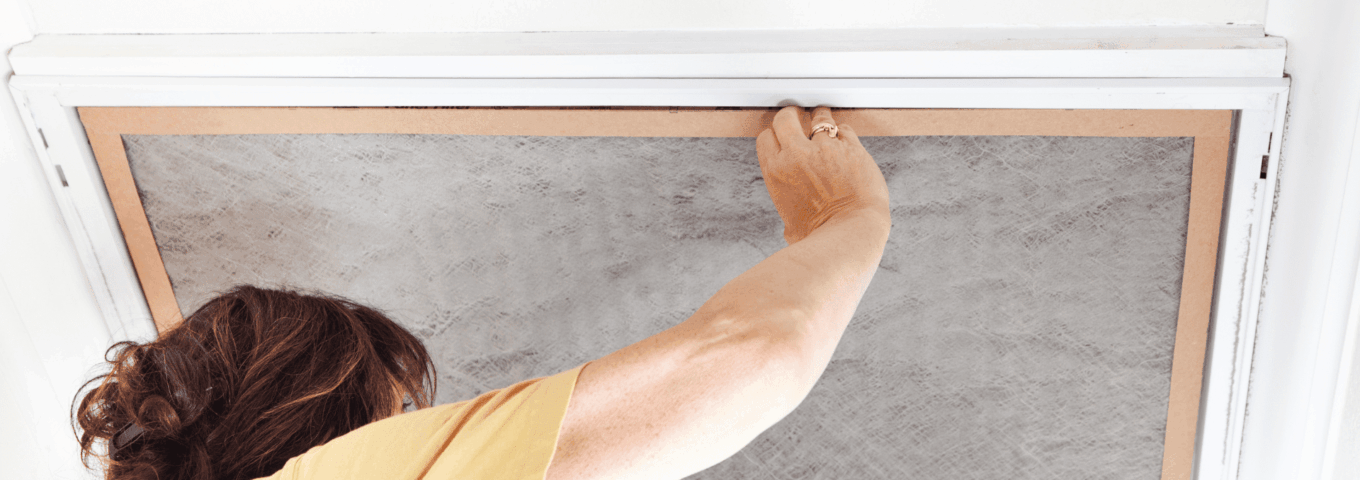
The HVAC filter captures particles as return air moves through the system.
Depending on the filter and equipment, this may include dust, pollen, pet
dander, and other airborne material.
Higher-efficiency filtration can capture smaller particles than many basic
filters, but homeowners should not simply install the highest MERV rating
they can find.
The filter needs to be compatible with the HVAC system and available
airflow. A filter that creates excessive resistance can negatively affect
system performance.
2. Keep the HVAC System Maintained
Routine HVAC maintenance gives a technician an opportunity to inspect
system cleanliness, airflow, filters, coils, drainage, and other components
that can affect comfort and equipment operation.
Maintenance is especially useful before heavy seasonal heating or cooling
demand begins.
3. Control Excess Indoor Humidity
High indoor humidity can make a Nashville home feel uncomfortable even
when the thermostat displays the desired temperature.
The air conditioner naturally removes some moisture during cooling
operation, but certain homes may require additional humidity control.
Whole-home dehumidification can be considered when excess indoor moisture
remains a persistent problem.
Right Time HVAC can evaluate humidity concerns as part of a complete
Nashville indoor air quality assessment
.
4. Consider Whole-Home Air Cleaning
Some homeowners may benefit from an air-cleaning or purification system
installed as part of the HVAC system.
These products are designed to supplement standard filtration and may be
useful when a homeowner wants greater control over certain airborne
particles, odors, or other indoor air concerns.
Equipment should be selected based on the problem being addressed rather
than assuming every home needs the same air-quality product.
Common Signs Your Indoor Air Quality May Need Attention
Indoor air quality problems are not always obvious. Homeowners often begin
investigating their HVAC system after noticing one or more of the
following:
- Dust returning quickly after cleaning
- Visible dust collecting around supply or return vents
- Persistent musty or stale odors
- Rooms that regularly feel damp or sticky
- Pet dander that is difficult to control
- HVAC filters becoming dirty unusually quickly
- Air that feels excessively dry during winter
- Uneven airflow between rooms
These symptoms do not automatically identify one specific problem.
Filtration, airflow, humidity, ductwork, household activities, HVAC
cleanliness, and outdoor conditions can all contribute.
Which Indoor Air Quality Solution Addresses Which Problem?
| Indoor Air Concern | HVAC Solution to Consider |
|---|---|
| Dust and pollen | Appropriate higher-efficiency filtration or supplemental air cleaning |
| Pet dander |
Better filtration combined with regular filter replacement and household cleaning |
| High indoor humidity | HVAC evaluation and whole-home dehumidification when appropriate |
| Dry winter air | Whole-home humidification when appropriate |
| Persistent airborne particles | Filtration assessment and supplemental air purification |
| Uneven airflow | HVAC airflow, filtration, and duct-system evaluation |
Why Fall Is a Good Time to Evaluate Indoor Air Quality
Fall can be a useful time to review indoor air quality because Nashville
homes begin transitioning from cooling season into regular heating use.
Windows and doors may remain closed more often as temperatures fall, and
heating equipment begins circulating indoor air for longer periods.
Scheduling
heating maintenance in Nashville
gives homeowners an opportunity to have the HVAC system inspected before
colder weather arrives.
It is also a practical time to review the air filter and discuss any
persistent dust, humidity, dryness, or air-quality concerns with an HVAC
professional.
Do You Need a Better Filter or a Whole-Home Air Purifier?
Not every indoor air problem requires an additional air purifier.
For some homes, improving filtration and maintaining the HVAC system may
address the primary concern. Other properties may benefit from a
whole-home air cleaner, humidity-control equipment, or a combination of
solutions.
The better approach is to identify the problem first and then select
equipment designed to address it.
Frequently Asked Questions About Allergies & Indoor Air Quality
Can an HVAC filter remove pollen from indoor air?
HVAC filters can capture certain pollen and other airborne particles as air
moves through the system. Actual filtration performance depends on the
filter type, particle size, system airflow, and how consistently the HVAC
system circulates air.
Should I use the highest MERV filter available?
Not automatically. Higher-efficiency filters can capture smaller particles,
but the HVAC system must be capable of maintaining adequate airflow through
the filter. Right Time HVAC can help determine which filtration level is
appropriate for your equipment.
Can high humidity affect indoor comfort?
Yes. Excess indoor humidity can make the home feel warmer or stickier and
can contribute to persistent moisture-related concerns. HVAC operation and
whole-home dehumidification are two areas that may be evaluated when
humidity remains high.
Will an air purifier replace my HVAC filter?
Usually not. Air purification equipment generally supplements the HVAC
filter rather than replacing the filtration the system already requires.
How often should I change my HVAC filter?
Filter replacement frequency depends on the filter, HVAC usage, pets,
household conditions, and manufacturer recommendations. Inspecting the
filter regularly is more useful than relying on one replacement schedule
for every home.
Can Right Time HVAC test indoor air quality problems?
Right Time HVAC can evaluate HVAC-related indoor air concerns and recommend
appropriate filtration, purification, humidification, dehumidification,
and system solutions based on the conditions in your home.
Improve Indoor Air Quality in Your Nashville Home
You do not have to guess which air-quality product your home needs.
Right Time HVAC can evaluate your concerns, HVAC system, filtration, and
humidity conditions before recommending practical options.
Learn more about our
indoor air quality services in Nashville
or
contact Right Time HVAC
to schedule an indoor air quality consultation.
You can also call
(615) 939-3490
for service throughout Nashville and Middle Tennessee.