
Signs You’d Benefit From an Inverter Heat Pump / Is It Worth It?
Signs You’d Benefit From an Inverter Heat Pump / Is It Worth It?
If you’ve been told an inverter heat pump is the “best” option, you’re not alone. Inverter (variable-speed) systems are one of the biggest comfort upgrades available in HVAC—but they aren’t automatically the right fit for every home or every budget. The real question is whether your home has the kind of comfort problems an inverter system is designed to solve, and whether the long-term benefits justify the upfront cost.
Below are the clearest signs you’d benefit from an inverter heat pump, along with practical guidance on when it’s worth it.
Sign 1: Your Home Has Noticeable Temperature Swings
If your system blasts on, the house feels great for a short time, then you start feeling warm or cool again before the next cycle, you’re experiencing the typical pattern of on/off equipment. Inverter heat pumps are built to reduce that “up and down” by running at lower levels for longer periods and adjusting output as conditions change. If you want steadier comfort instead of big cycles, an inverter system is often a strong match.
Sign 2: Certain Rooms Never Match the Thermostat
Bonus rooms, upstairs bedrooms, rooms over garages, and spaces with lots of sun exposure often feel different than the rest of the house. While ductwork and airflow still matter, inverter systems can help because they don’t rely on short, full-power bursts. Longer, smoother runtimes can improve how evenly temperatures settle across the home. If you constantly deal with one hot room and one cold room, you’re a good candidate to at least consider inverter technology.
Sign 3: Your Home Feels “Cool” but Still Humid or Sticky
In Nashville, humidity is a comfort dealbreaker. Many homeowners set the thermostat lower than they want simply to feel less sticky. Inverter heat pumps can help because they typically run longer at lower output, giving the system more opportunity to remove moisture while maintaining temperature. If humidity is a recurring complaint, inverter performance can be a meaningful upgrade—especially when paired with proper airflow setup and the right equipment selection.
Sign 4: Your System Is Loud or the Airflow Feels Harsh
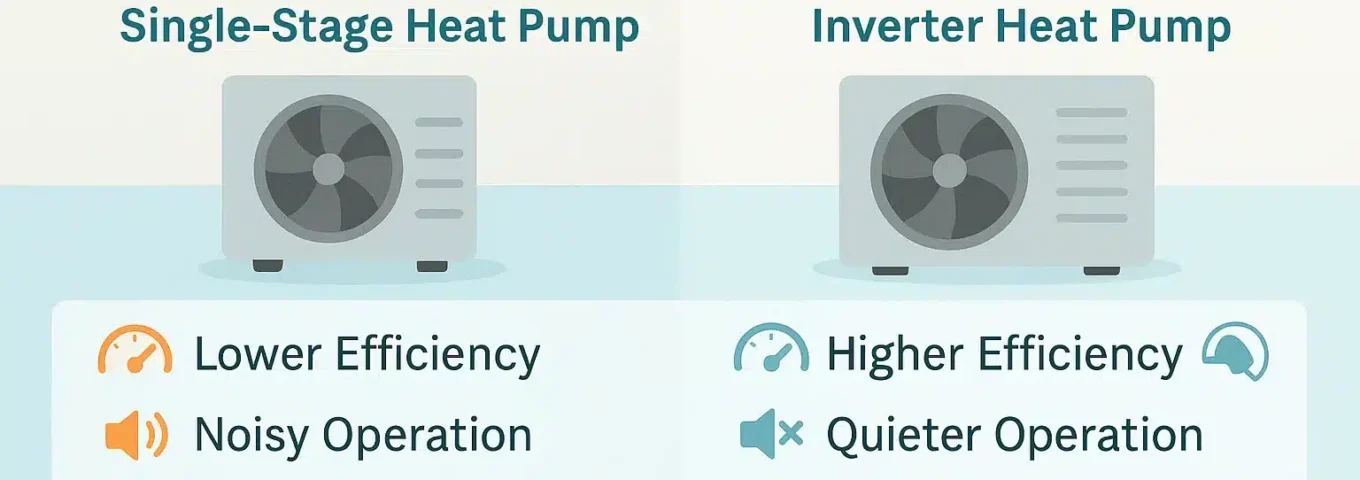
If your system is noisy when it starts, or you feel a strong rush of air that comes and goes, you may be living with the normal behavior of single-stage equipment. Inverter systems usually operate more quietly because they don’t have to start at full speed every time. Many are paired with variable-speed indoor blowers that keep airflow smoother and less drafty. If noise or “blast” airflow is a daily annoyance, an inverter system is often worth considering.
Sign 5: You’re Seeing High Bills During Moderate Weather
One overlooked clue is energy use when the weather isn’t extreme. In many homes, the system uses a surprising amount of energy during mild-to-warm or mild-to-cool days because it cycles frequently. Inverter systems can be more efficient in these conditions by modulating and maintaining comfort without constant restarts. If your bills feel high even when temperatures outside aren’t severe, it may point to cycling and efficiency limitations that inverter technology can address.
Sign 6: Your Household Comfort Needs Change Throughout the Day
Homes aren’t static. Sun exposure shifts, people come and go, cooking adds heat, showers add moisture, and some rooms are used more than others. Inverter systems are designed for that reality. If your home’s comfort needs change a lot throughout the day and your current system struggles to keep up smoothly, an inverter heat pump may be a better fit than equipment that only runs in fixed stages.
Sign 7: You Plan to Stay in the Home and Want a “Long-Term Comfort” Upgrade
If you’re moving soon, you may not benefit as much from paying extra for premium modulation. But if you plan to stay, and comfort matters to you daily, inverter systems can be one of the most noticeable upgrades you can make. Many homeowners choose inverter not only for possible savings, but because the house simply feels better—more stable temperatures, better humidity control, and quieter operation.
Is It Worth It?
For many homeowners, the value of an inverter heat pump comes down to two categories:
It’s often worth it if you care most about:
- Smoother, more even temperatures
- Better humidity control and less “sticky” indoor air
- Quieter operation and less aggressive cycling
- Premium comfort and a system that adapts to changing conditions
It may not be worth it if:
- Your home is already comfortable and consistent room-to-room
- Your main goal is the lowest upfront cost
- Ductwork issues are the real cause of your comfort problems and haven’t been addressed
- You don’t plan to stay in the home long enough to enjoy the comfort benefits
What Makes the Biggest Difference Either Way
Even the best inverter heat pump won’t perform the way it should if the system is oversized, airflow is restricted, or installation details are ignored. Proper sizing, ductwork condition, airflow setup, and correct configuration are what determine whether you’ll actually feel the advantages of inverter technology.
If you’re trying to decide whether an inverter heat pump is worth it, the best next step is a comfort-focused evaluation. When your system is selected and set up correctly, inverter technology can turn a home that feels inconsistent, humid, or noisy into one that feels steady, quiet, and comfortable every day.